

Reaching Homeowners Who Didn’t Submit: Solar Installers’ Guide
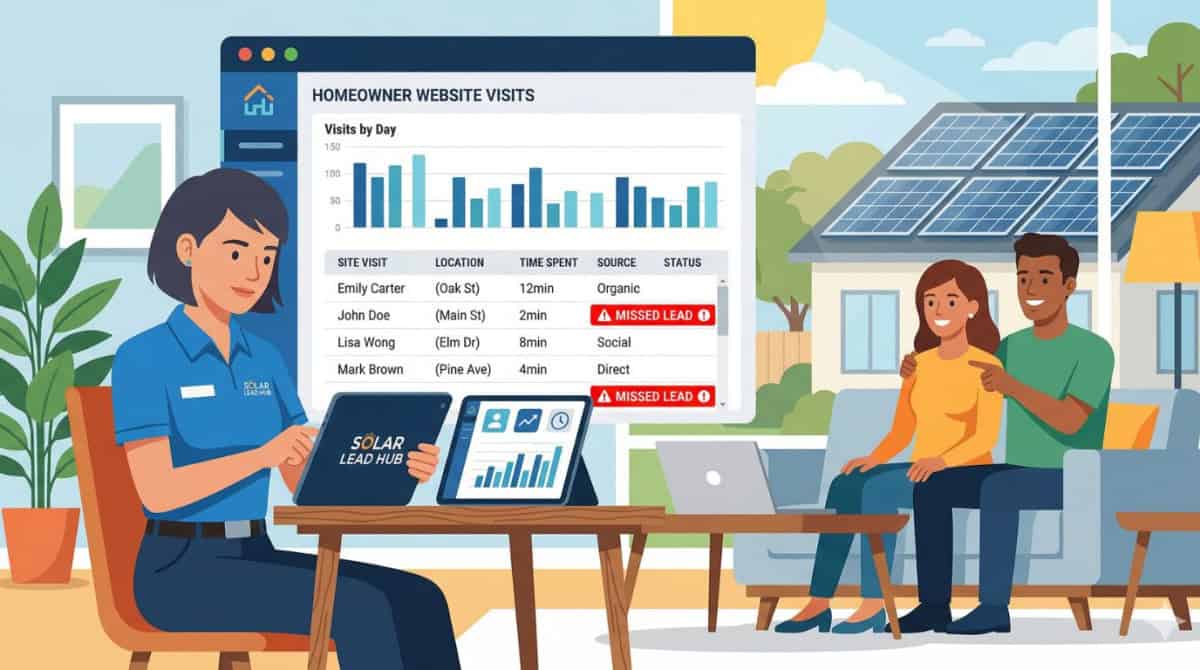
Have you ever looked at your marketing efforts and felt like you were casting a net into the ocean, hoping for a few valuable fish? In the complex world of B2B, simply generating leads isn’t enough. For solar installers, implementing smart B2B marketing strategies can help you consistently connect with homeowners who didn’t submit a form, ensuring your outreach reaches the right prospects ready to engage.
This guide is designed to help you shift your perspective. We’ll explore practical, actionable B2B marketing strategies that go beyond surface-level outreach to build meaningful connections. You’ll learn how to identify, attract, and convert ideal B2B clients, ensuring your marketing budget delivers real, measurable returns. Our aim is to demystify effective B2B marketing, providing clear steps you can implement today to cultivate a pipeline of well-qualified prospects and drive sustainable business growth.
Finding Your True North: Defining Your Ideal Client Profile
Before you even think about marketing tactics, you need to deeply understand who you’re trying to reach. This isn’t just about company size or industry; it’s about the headaches they face, their aspirations, and how your service truly makes their lives easier. Many businesses stumble because their B2B marketing strategies are too broad, aiming at everyone and therefore appealing to no one specific.
Beyond Demographics: Psychographics and Pain Points
Think of your ideal client not as a corporation, but as the decision-makers within it. What keeps them up at night? What are the biggest inefficiencies in their current operations? Perhaps they’re struggling with outdated technology, losing market share to competitors, or facing increasing regulatory pressures. Your solution should directly address these specific pain points.
For example, if you offer cybersecurity solutions, your ideal client might not just be “a small business.” It could be “a growing professional services firm with 20-50 employees, handling sensitive client data, and lacking dedicated in-house IT security expertise.” This level of detail allows you to tailor your messaging far more effectively.
Crafting a Detailed Ideal Customer Profile (ICP)
Start by reviewing your most successful current clients. What do they have in common?
- Industry: Are there particular sectors where your solution shines?
- Company Size: Do you work best with startups, mid-market companies, or large enterprises?
- Revenue/Growth Stage: Are they looking for rapid growth, cost savings, or stability?
- Geographic Location: Is location a factor for your services?
- Specific Challenges: What unique problems did they have before working with you?
- Decision-Maker Roles: Who are the key people you need to influence (e.g., CTO, Head of Sales, CEO)?
Creating a detailed ICP is like drawing a clear map to your target audience. It guides all subsequent B2B marketing strategies, from the content you create to the platforms you use.
Becoming a Lighthouse: Establishing Thought Leadership
Once you know who you’re talking to, you need to give them a reason to listen. In the crowded B2B space, simply talking about your product isn’t enough; you need to demonstrate your expertise and become a trusted resource. This means moving from product-centric marketing to thought leadership. You’re not just selling a widget; you’re offering insights, solutions, and a clear understanding of the industry landscape.
Content That Educates and Solves Problems
Your content should aim to answer the questions your ideal clients are asking, even before they know to ask them. This might include:
- In-depth Guides and Whitepapers: Provide comprehensive resources on complex industry topics. For a B2B SaaS company, this could be “The Ultimate Guide to Streamlining Project Management for Creative Agencies.”
- Webinars and Workshops: Host online events where you share valuable knowledge and practical skills. This positions you as an educator, not just a vendor.
- Case Studies: Showcase how your solutions have directly helped other businesses overcome challenges. Focus on the client’s problem, your unique approach, and the tangible results achieved, such as increased efficiency or cost savings. These are incredibly powerful for demonstrating value in B2B marketing strategies.
- Blog Posts and Articles: Regularly publish well-researched pieces that offer unique perspectives on industry trends, challenges, and solutions. Don’t be afraid to tackle controversial topics or offer counter-intuitive advice.
Remember, the goal isn’t to sell directly in these pieces, but to build trust and demonstrate that you truly understand their world. When you consistently provide value, clients will naturally look to you when they are ready to make a purchase.
Speaking Engagements and Industry Participation
Beyond digital content, consider where your target audience gathers offline (or in virtual industry events). Speaking at industry conferences, participating in panel discussions, or even hosting your own local roundtables can significantly elevate your profile. This gives you a platform to share your expertise directly and build connections with potential clients and influencers.
The Personal Touch: Building Relationships, Not Just Leads

In B2B, decisions are often made by committees, involve significant financial commitments, and carry personal risk for the decision-makers. This means relationships are paramount. Generic, mass-produced outreach simply won’t cut it. Your B2B marketing strategies must incorporate elements of personalized communication and genuine engagement.
Customized Outreach That Resonates
Gone are the days of blasting out identical emails to hundreds of prospects. Instead, focus on highly personalized approaches:
- Tailored Email Sequences: Reference specific details about their company or recent news. Show you’ve done your homework. “I noticed you recently announced [X new initiative] – our [Y service] has helped similar companies achieve [Z benefit] in that area.”
- LinkedIn Engagement: Don’t just connect; engage meaningfully with their posts, share relevant articles, and offer constructive comments. This builds visibility and rapport before you ever make a sales pitch.
- Direct Mail (Yes, it’s back!): In a digital-first world, a well-placed, high-quality physical mailer can cut through the noise. This could be a personalized letter, a small gift relevant to their business, or an invitation to an exclusive event.
The key is to demonstrate that you see them as an individual business, not just another entry on a spreadsheet.
Nurturing Relationships Through Value
The sales cycle in B2B can be long. Your marketing shouldn’t end after the first interaction. Implement robust nurturing sequences that continue to provide value over time:
- Exclusive Content Access: Offer early access to reports, webinars, or tools for those who have shown interest.
- Personalized Updates: Share industry news or insights that are directly relevant to their business challenges.
- Check-ins (Non-Salesy): A simple email asking “How are things going with X project?” or “Did you find that resource helpful?” can go a long way in building trust without pushing for a sale.
Think of it as tending to a garden. You wouldn’t plant a seed and expect an immediate harvest; you water it, provide sunlight, and remove weeds. Similarly, nurturing B2B relationships requires consistent, thoughtful attention.
If you’re finding it challenging to implement these personalized strategies at scale, consider exploring CRM systems specifically designed for B2B. They can help you organize interactions, automate repetitive tasks, and ensure no potential client falls through the cracks.
Measuring What Matters: Optimizing for Predictable Growth
You wouldn’t navigate an unfamiliar city without a map, and you shouldn’t run your B2B marketing without clear metrics. Understanding what’s working and what isn’t allows you to refine your approach, reallocate resources, and ensure your efforts are consistently driving results. This data-driven mindset is fundamental to successful B2B marketing strategies.
Key Performance Indicators (KPIs) Beyond Just Leads
While lead volume is important, it’s crucial to look deeper. Consider these KPIs:
- Lead Quality Score: Develop a scoring system for leads based on their ICP fit, engagement levels, and stated needs. This helps prioritize sales efforts.
- Conversion Rates (per stage): Track how many leads move from initial contact to qualified prospect, to proposal, and finally to closed-won. Identify bottlenecks in your funnel.
- Customer Acquisition Cost (CAC): How much does it cost you to acquire a new paying customer? This helps assess the efficiency of your marketing spend.
- Lifetime Value (LTV): What is the average revenue a customer generates over their entire relationship with your company? High LTV clients are often worth more investment in acquisition.
- Content Engagement Metrics: For your thought leadership efforts, track website traffic, time on page, download rates for whitepapers, and webinar attendance.
These metrics offer a holistic view of your B2B marketing performance, allowing you to make informed decisions rather than relying on guesswork.
Iteration and Adaptation: The Engine of Improvement
The B2B landscape is always changing, and so should your marketing. Treat your B2B marketing strategies as a living experiment.
- A/B Testing: Experiment with different headlines, call-to-actions, email subject lines, and ad creatives to see what resonates most with your audience.
- Feedback Loops: Regularly solicit feedback from your sales team about lead quality and what messages are proving most effective in closing deals. Gather insights directly from clients about what attracted them to you.
- Competitive Analysis: Keep an eye on what your competitors are doing, not to copy them, but to identify gaps in the market or new opportunities you can leverage.
By continuously analyzing your data and adapting your approach, you can create a marketing engine that consistently fuels your business growth and minimizes wasted effort.
Conclusion: Charting Your Course to B2B Success
Navigating the complexities of B2B marketing requires more than just throwing campaigns at the wall and seeing what sticks. It demands a deliberate, data-driven approach centered on understanding your ideal client, establishing yourself as an invaluable resource, building genuine relationships, and meticulously measuring your progress.
By defining your ideal client profile with precision, building a reputation as a thought leader through valuable content, engaging with prospects in a personalized manner, and consistently refining your strategies based on measurable data, you can move beyond simply generating leads. You can cultivate a predictable pipeline of well-qualified opportunities, leading to stronger client relationships and sustainable business growth.
It’s time to shift from chasing every possible lead to strategically attracting the right ones. Start by revisiting your ideal customer profile today. Use that clarity to refine your content, personalize your outreach, and commit to tracking the metrics that truly matter. Your next best client is waiting for you to demonstrate how you can genuinely solve their problems. If you’re ready to transform your B2B marketing from a guessing game into a predictable growth engine, begin by auditing your current content strategy and identifying areas where you can deliver more tailored insights to your target audience.
Key Takeaways:
- Effective B2B marketing prioritizes quality over quantity in lead generation.
- Understanding your ideal customer before you reach out is paramount.
- Thought leadership and industry expertise build trust and attract the right clients.
- Personalized communication and relationship building are crucial in the B2B landscape.
- Measurable results guide continuous improvement in your B2B marketing strategy.
FAQs
1. How can solar installers identify homeowners who visited their website but did not submit a form?
Solar installers can use website analytics tools such as Google Analytics or heat mapping software to track visitor behavior. Additionally, implementing tracking pixels from advertising platforms like Facebook or Google Ads allows them to retarget visitors who did not complete a form.
2. What are effective methods to re-engage homeowners who visited a solar installer’s site but didn’t convert?
Effective methods include retargeting ads on social media and search engines, sending follow-up emails if contact information was partially collected, offering incentives like free consultations, and providing educational content to address potential concerns or questions.
3. Is it legal to retarget visitors who did not submit a form on a solar installer’s website?
Yes, retargeting is legal as long as it complies with privacy laws such as GDPR or CCPA. This typically involves informing visitors about cookie usage through a privacy policy and cookie consent banner, and not collecting or using personal data without consent.
4. How can solar installers improve their website forms to increase submission rates?
Installers can simplify forms by reducing the number of required fields, using clear and compelling calls to action, ensuring mobile-friendliness, and providing trust signals such as testimonials or security badges to encourage form completion.
5. What role does content marketing play in converting homeowners who initially did not submit a form?
Content marketing helps educate and build trust with potential customers by addressing common questions, showcasing benefits of solar energy, and demonstrating expertise. Providing valuable content can encourage visitors to return and eventually submit a form.
Related Posts

Reconnecting with Homeowners: Pool Service Companies Reach Out
You’ve built a solid pool service business. Your team is skilled, your equipment is reliable,…

How to Identify Anonymous Website Visitors and Generate More B2B Leads
Your website attracts potential customers every day, but many leave without revealing who they are…

Unlocking Anonymous Traffic: B2B Lead Generation Strategy
Key Takeaways Around 98% of your B2B website visitors are anonymous, representing a massive untapped…