

Cutting Your Sales Cycle in Half With Pre-Qualified Leads

The hum of business often sounds like a race against time, especially when it comes to sales. You’re constantly looking for ways to accelerate growth, improve efficiency, and, ultimately, close deals faster. One of the biggest drains on your sales team’s energy and your company’s resources is the time spent on prospects who aren’t a good fit, or who aren’t ready to buy. It’s like trying to fill a leaky bucket – you pour in effort, but much of it seeps away.
Imagine a world where your sales team primarily engages with individuals who already understand their need, whose budget aligns with your offering, and who are genuinely interested in a solution like yours. This isn’t wishful thinking; it’s the power of pre-qualified leads. In this article, we’ll explore practical strategies for business owners and marketing directors to truly optimize your lead generation and qualification processes.
The Cost of Unqualified Leads: More Than Just Time
Every minute your sales representative spends on a prospect who isn’t a good fit is a minute they could have spent with someone who is. This isn’t just about lost productivity; it’s about a ripple effect across your entire organization. Unqualified leads inflate your sales cycle, frustrate your sales team, skew your forecasting, and ultimately, impact your bottom line. It’s like a finely tuned engine trying to run on substandard fuel – it sputters, wastes energy, and never reaches its full potential.
Effective sales cycles thrive on momentum. When your pipeline is filled with prospects who are genuinely interested and meet your ideal customer profile, that momentum builds naturally. Your team isn’t just selling; they’re solving problems for ready buyers. This creates a far more efficient and enjoyable sales environment, and critically, it drives revenue acceleration. The goal is not just to get more leads, but to get better leads, specifically pre-qualified leads, that accelerate your sales process.
Sharpening Your Qualification Blade: Beyond Basic Filters
Many businesses use some form of lead qualification, but often it’s too broad, allowing too many unsuitable prospects to slip through. To truly cut your sales cycle, you need to pre-qualify harder. This involves moving past simple demographic checks and delving into intent, urgency, and fit with a more sophisticated approach.
Implementing Robust Lead Scorecards
Think of a lead scorecard as a personalized checklist that every incoming lead must pass, earning points for specific attributes. This isn’t a one-size-fits-all solution; your scorecard should be deeply customized to your ideal customer profile (ICP).
- Define your ideal customer: Before you can score, you need to meticulously define who your best customers are. What industries are they in? What’s their company size? What pain points do they consistently face that your product or service solves exceptionally well?
- Assign weighted values: Not all qualifying characteristics are equal. A lead’s budget might be more critical than their location. Assign higher point values to criteria that are strong indicators of a successful, high-value customer. For instance, an explicit mention of a budget for your solution could be 20 points, while simply visiting your pricing page might be 5.
- Utilize AI for predictive scoring: Modern CRM systems and marketing automation platforms offer AI-driven lead scoring capabilities. These tools analyze historical closed-won deals to identify patterns and behaviors that predict conversion. They can sift through vast quantities of data points (website visits, content downloads, email opens, social media engagement) to build a probabilistic model, guiding your team to focus on the leads most likely to close. This helps you identify pre-qualified leads with uncanny accuracy.
- Filter out disqualifiers explicitly: Just as important as identifying good fits is identifying definite bad fits. If your minimum contract value is $10k, and a lead indicates a budget of $1k, they should be automatically flagged or removed from the sales-qualified lead queue. This proactive disengagement saves valuable time.
Beyond the “Discovery Call”: The Value Call
The traditional “discovery call” often feels like an interrogation for the prospect and a fishing expedition for the sales rep. To differentiate and accelerate, replace it with a “value call.” This reframes the initial interaction from gathering information to providing immediate insight and demonstrating tangible value to the pre-qualified leads.
- Do your homework: Before the call, thoroughly research the prospect’s company, industry, recent news, competitors, and any publicly available information on their challenges. Use AI tools to scour their website, LinkedIn, and sector news for relevant talking points and potential pain points.
- Prepare tailored insights: Instead of asking “What are your challenges?”, present “Based on our understanding of businesses like yours, we’ve identified X, Y, and Z as common challenges. Does this resonate?” Back this up with relevant benchmarks, industry trends, or even anonymized case studies from similar clients.
- Offer actionable intelligence: Provide something genuinely useful during the call, even if they don’t buy immediately. This could be competitor intelligence, a micro-audit of their current process, or a strategic recommendation. This builds trust and positions you as a knowledgeable advisor, not just a salesperson.
- Focus on their desired outcomes: Shift the conversation from your features to their outcomes. How will your solution help them achieve their specific business goals? Use their language and directly address their pre-researched needs.
Rebuilding MQL Models for Revenue Predictability

For too long, marketing qualified lead (MQL) definitions have been based on activities that might indicate interest, but don’t reliably predict a closed deal. Downloads, webinar attendance, or multiple page visits are good signals, but they don’t always translate to revenue. To truly optimize for pre-qualified leads, your MQL model needs a fundamental reassessment, rooted in what actually drives sales.
Auditing Closed-Won Deals
Your most valuable data lies in your successfully closed deals. These are your blueprints for success.
- Backward analysis: Work backward from your most profitable closed-won deals. What behaviors did these customers exhibit before they became opportunities? Did they download specific content? Did they interact with certain features on your website? What was their job title? What was their company size?
- Identify commonalities: Look for patterns. Is there a specific combination of actions or demographic data that consistently appears in your best customers? These are your true revenue-predicting behaviors.
- Isolate high-intent signals: An MQL should represent a lead that has demonstrated not just interest, but intent to solve a problem that your business addresses. For example, scheduling a demo or requesting a pricing sheet is a much stronger intent signal than merely downloading a general whitepaper.
Aligning Sales and Marketing Definitions
One of the biggest disconnects in lead qualification is often the differing perceptions between sales and marketing teams. Marketers might consider a lead “qualified” based on engagement, while sales only considers them qualified once budget, authority, need, and timeline (BANT) are confirmed.
- Jointly define “sales-ready”: Sales and marketing leadership must collaborate to create a crystal-clear, shared definition of what constitutes a “sales-ready” lead. This definition should be based on the insights from your closed-won deal audit.
- Establish a service-level agreement (SLA): Create an SLA that outlines marketing’s commitment to delivering a certain volume and quality of leads, and sales’ commitment to following up on those leads within a specific timeframe. This fosters accountability and ensures that pre-qualified leads receive prompt attention.
- Regular feedback loops: Implement a consistent process for sales to provide feedback to marketing on lead quality. This isn’t about finger-pointing; it’s about continuous improvement. If a batch of leads isn’t converting, marketing needs to know why so they can adjust their targeting and qualification criteria.
The AI Advantage: Streamlining Qualification and Engagement
Artificial intelligence is no longer a futuristic concept; it’s a practical tool that can significantly enhance your lead qualification and shorten your sales cycle by automating tasks, providing insights, and ensuring rapid engagement for pre-qualified leads.
AI-Powered Lead Scoring and Prioritization
We touched on AI scoring earlier, but its impact on prioritization cannot be overstated.
- Dynamic scoring adjustments: AI algorithms can constantly learn and adapt. As new data comes in, the scoring model refines itself, becoming more accurate at predicting which leads are truly sales-ready. This ensures your sales team is always focusing on the highest-potential pre-qualified leads.
- Real-time alerts: Set up AI-powered alerts in your CRM. When a lead hits a specific high score or exhibits a high-intent behavior (like repeated visits to a pricing page after a demo), the system can immediately notify the relevant sales rep, prompting rapid follow-up.
Automating Research and Personalization
Preparing for a value call used to be a time-consuming manual task. AI can drastically reduce this overhead.
- Automated company and contact research: AI tools can quickly pull together comprehensive profiles of target companies and key decision-makers. This includes identifying their industry, recent news, technological stack, reported challenges, and even insights into their competitive landscape.
- Personalized messaging suggestions: Based on the AI’s research, it can suggest personalized talking points or even draft initial email responses that are highly relevant to the prospect’s specific situation, making initial outreach much more impactful for pre-qualified leads.
- Conversation intelligence: During actual sales calls, AI-driven conversation intelligence tools can transcribe, analyze, and even provide real-time suggestions to sales reps. They can identify keywords, flag objections, and even assess the prospect’s sentiment, helping reps steer the conversation toward successful outcomes.
The Need for Speed: Rapid Follow-Up and Behavior-Based Priority
Even with the most perfectly pre-qualified leads, the advantage can be lost if your follow-up is slow. In today’s fast-paced business environment, speed is paramount. High-intent leads cool off quickly, and your competitors are likely just a click away.
The Power of Immediate Engagement
The data is clear: the faster you respond to an inbound lead, the higher your chances of connecting and converting.
- Within 5 minutes is critical: Studies show that contacting a lead within 5 minutes of their inquiry makes them 21 times more likely to answer than if you wait even 30 minutes. This immediate response demonstrates your responsiveness and commitment.
- Dedicated rapid response teams: Consider dedicating a specific sales development representative (SDR) or a small team to immediate inbound lead follow-up. Their sole focus is to connect with these hot leads as quickly as possible, qualify them further, and schedule a deeper dive with an account executive.
- Leverage automation for initial contact: While personal follow-up is superior, automated emails or messages can bridge the gap during off-hours or high volume. Ensure these automated touches are personalized and offer immediate value, such as a helpful resource or a direct link to book a call.
Prioritizing Follow-Up Based on Real-Time Behavior
Not all pre-qualified leads require the same urgency at all times. Their real-time actions should dictate your next move.
- Behavioral triggers: Set up triggers in your CRM or marketing automation platform. For instance, if a lead downloads a high-value piece of content, visits your pricing page twice in an hour, or views a product demo video, this should trigger an immediate alert and reprioritize them for follow-up.
- “Hot lead” designation: Create a “hot lead” designation in your systems. When a lead exhibits a combination of high-scoring attributes and recent high-intent behavior, they are automatically flagged as hot, requiring immediate attention.
- Multi-channel follow-up: Don’t limit yourself to email. If a pre-qualified lead is hot, try a phone call, a LinkedIn message, or even a personalized video message. Vary your approach based on what you know about the prospect and their preferred communication channels.
If you’re looking for ways to further streamline your entire sales and marketing operation, consider reviewing our guide on integrating CRM and marketing automation platforms for seamless data flow and enhanced communication.
Cultivating Referral Networks and Strategic Partnerships
While strong internal processes are vital for generating pre-qualified leads, don’t overlook the power of external forces. Referrals and partnerships can be incredibly effective channels for acquiring genuinely high-quality leads, often at a lower cost and with a significantly shorter sales cycle. These are leads that come with inherent trust and a pre-existing notion of value, making them inherently pre-qualified leads.
Building a Robust Referral Program
A formalized referral program turns your satisfied customers into an extension of your sales team. These leads arrive with built-in credibility.
- Identify your advocates: Who are your happiest customers? Who consistently gives you positive feedback? These are your prime candidates for referral.
- Offer compelling incentives: Referral programs work best when there’s a clear benefit for the referrer. This could be a discount on their next service, a monetary bonus, or even exclusive access to new features or events. Ensure the incentive is valuable enough to motivate action.
- Make it easy to refer: Provide clear instructions, pre-written email templates, or a simple online form that current customers can use to refer new business. Remove any friction from the process.
- Communicate success: When a referred lead closes, celebrate it with the referrer. Let them know the impact of their contribution. This reinforces their positive experience and encourages future referrals.
Forging Strategic Partnerships
Strategic alliances with complementary businesses can unlock new customer segments and deliver a consistent stream of pre-qualified leads.
- Identify complementary businesses: Look for companies that serve your ideal customer base but don’t directly compete with you. For example, if you sell marketing software, a partner might be a web design agency or a cybersecurity firm.
- Develop joint value propositions: How can you collectively offer more value to your shared customers? This could be through integrated solutions, shared knowledge, or joint marketing efforts.
- Build a referral agreement: Clearly define the terms of the partnership, including lead sharing protocols, commission structures (if applicable), and joint marketing commitments. Transparency and mutual benefit are key.
- Co-market and co-sell: Engage in joint webinars, content creation, or even bundled service offerings. This exposes both your businesses to a new audience and provides a strong endorsement that can significantly pre-qualify leads.
Conclusion: Your Path to Accelerated Revenue
Cutting your sales cycle isn’t about cutting corners; it’s about intelligent, strategic optimization. By focusing relentlessly on pre-qualified leads, you transform your sales process from a broad net-casting exercise into a precision targeting operation. This means your marketing efforts are smarter, your sales team is more efficient, and your revenue forecast becomes far more predictable.
Implementing these strategies requires collaboration between sales and marketing, a commitment to data-driven decision-making, and a willingness to embrace new technologies like AI. But the payoff is substantial: less wasted effort, higher conversion rates, happier sales teams, and ultimately, a healthier bottom line. Start by auditing your current lead sources and qualification process. Then, choose one or two of these tactics to implement and measure the impact. The journey to a significantly shorter sales cycle begins with a single, well-qualified step.
Next Step: Schedule a joint meeting with your sales and marketing leadership teams to re-evaluate your current lead qualification criteria using the insights from your last 10 closed-won deals.
Key Takeaways
- Focus on True Qualification: Go beyond basic filters with scorecards and AI to identify genuine pre-qualified leads ready for purchase.
- Deliver Value Upfront: Replace traditional discovery calls with “value calls” that offer immediate insights and build trust.
- Audit Closed Deals: Rebuild your MQL definitions based on behaviors that reliably predict closed-won revenue, not just engagement.
- Embrace AI Tools: Use AI for lead scoring, research, personalization, and rapid response to streamline your sales process.
- Prioritize Speed & Relevance: Implement rapid follow-up protocols and behavior-based prioritization to engage high-intent pre-qualified leads immediately.
FAQs
What are pre-qualified leads?
Pre-qualified leads are potential customers who have been evaluated based on specific criteria to determine their likelihood of making a purchase. This evaluation helps sales teams focus their efforts on prospects who are more likely to convert, thereby increasing efficiency.
How do pre-qualified leads help in cutting the sales cycle?
Pre-qualified leads help shorten the sales cycle by ensuring that sales representatives engage only with prospects who have a genuine interest and the necessary budget, authority, and need. This targeted approach reduces time spent on unqualified leads and accelerates the decision-making process.
What criteria are commonly used to pre-qualify leads?
Common criteria for pre-qualifying leads include budget, authority to make purchasing decisions, need for the product or service, and timeline for purchase. These factors are often summarized by the BANT framework (Budget, Authority, Need, Timeline).
What methods can be used to generate pre-qualified leads?
Methods to generate pre-qualified leads include targeted marketing campaigns, lead scoring systems, online forms with qualifying questions, and initial sales calls or consultations. These approaches help filter out unqualified prospects early in the sales process.
Can using pre-qualified leads improve overall sales performance?
Yes, using pre-qualified leads can improve overall sales performance by increasing conversion rates, reducing the time and resources spent on unproductive leads, and allowing sales teams to focus on high-potential prospects, ultimately leading to higher revenue and efficiency.
Related Posts

The True Cost of Chasing Unqualified Leads
You're a business owner or a marketing director focused on growth. You’re investing in marketing,…

Window Installation Marketing Strategies: Attracting Homeowners Comparing Installation Quotes
Attracting Homeowners Comparing Window Installation Quotes: A Practical B2B Marketing Guide As a business owner…
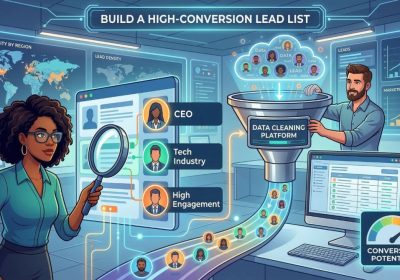
How to Build a Lead List That Converts
Building a truly effective lead list in today’s competitive business landscape is less about the…