

How Website Visitor Identification Software Converts Anonymous Traffic into Qualified B2B Leads
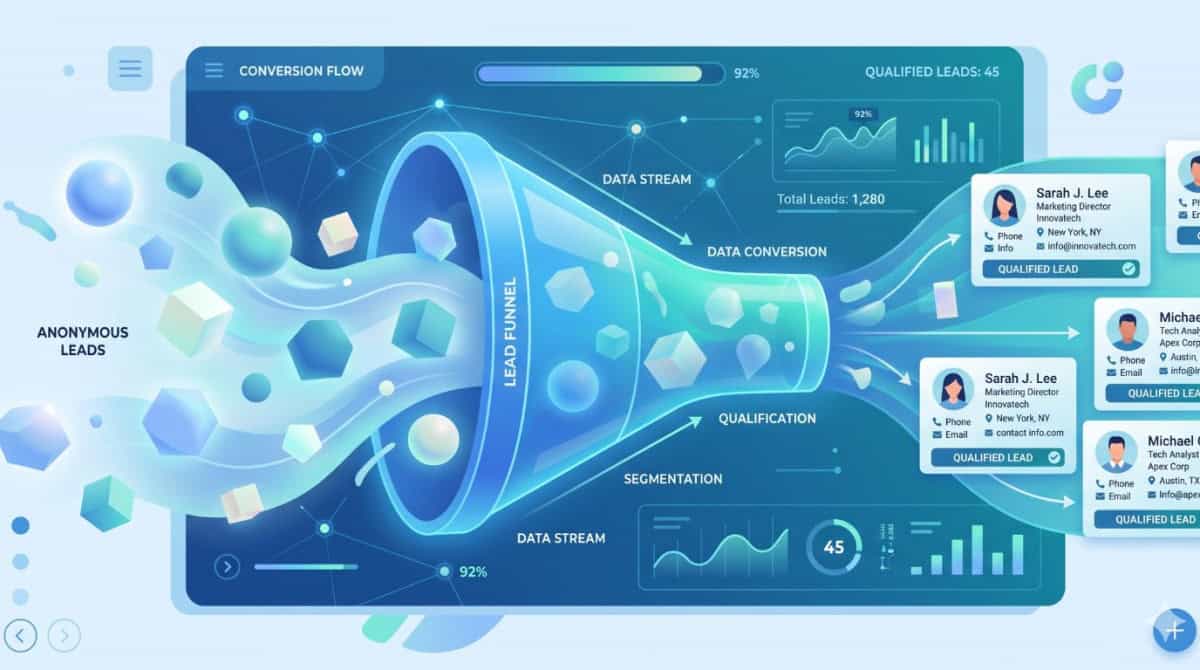
Did you know that over 98% of your website visitors leave without ever filling out a form or identifying themselves? That means the vast majority of the traffic you are paying for — through ads, SEO, and content — simply disappears without a trace. For B2B marketers and sales teams, this is one of the most costly and frustrating realities of modern digital marketing.
Website visitor identification software is changing that equation entirely. By revealing who is visiting your site, which pages they are exploring, and what they are interested in, this technology transforms passive web traffic into a pipeline of actionable sales leads. In this guide, we break down exactly how it works, what to look for, and why forward-thinking companies are making it a cornerstone of their lead generation strategy.
What Is Website Visitor Identification Software?
Website visitor identification software is a category of B2B sales and marketing technology that de-anonymizes website traffic. Instead of showing you only aggregated traffic data, it tells you specifically which companies — and in many cases which individuals — are visiting your website, how long they stayed, and what content they engaged with.
The technology works by matching IP addresses and digital identifiers against large databases of business contact information. When a visitor lands on your site, the software cross-references their network data with firmographic databases to resolve their identity. The result is a real-time stream of company-level or contact-level intelligence that your sales team can act on immediately.
According to research by Demand Gen Report, B2B companies that implemented visitor identification tools saw an average increase of 30% in qualified leads without increasing their ad spend. That is a significant lift that directly impacts revenue and pipeline velocity.
Why Anonymous Website Traffic Is a Hidden Revenue Problem
Think about it this way: if 1,000 people walked into your physical storefront each day and 980 of them left without speaking to anyone, you would immediately take action to engage them. Yet most B2B companies accept this exact scenario on their websites every single day.
The problem is compounded in B2B environments because buying decisions are rarely made by a single person. Multiple stakeholders — procurement, IT, finance, and the end user — all research solutions independently before a company reaches out to a vendor. Each of those research sessions on your website is a buying signal you are currently missing.
A study by Forrester Research found that 68% of B2B buyers conduct extensive online research before ever contacting a vendor. If you cannot identify who is doing that research on your site, you are handing a significant competitive advantage to rivals who can. Lead Eagle was built specifically to solve this problem, giving B2B companies the visibility they need to act on real buying signals rather than guessing.
Key Features to Look for in Visitor Identification Tools
Not all website visitor identification software is created equal. As the market has matured, the range of capabilities has expanded significantly. Here is what separates best-in-class solutions from basic IP lookup tools.
Real-Time Identification: The most valuable leads are the ones you can follow up with while their interest is still fresh. Look for tools that surface visitor data in real time or near-real time, not just in daily digest reports. The faster your team can respond, the higher your conversion rates will be.
Contact-Level Resolution: Company-level identification is useful, but knowing the specific person within that company who visited your pricing page is far more powerful. Advanced tools like EagleID™ go beyond IP matching to resolve individual visitor identities, giving your sales team a named contact to reach out to rather than just a company name.
Behavioral Intelligence: Knowing that someone from Acme Corp visited your site is only the start. The real value lies in understanding what they looked at. Did they visit your pricing page three times? Did they download a case study and then check your integrations page? This behavioral data allows your team to tailor their outreach with precision.
CRM Integration: Visitor identification data is most valuable when it flows automatically into your existing sales workflows. Look for solutions that integrate natively with your CRM, marketing automation platform, and sales engagement tools so that identified visitors trigger the right follow-up actions without manual intervention.
How B2B Sales Teams Use Visitor Identification in Practice
Understanding the technology is one thing — seeing how high-performing teams apply it is where the real insight lies. Here are three practical use cases that illustrate the power of website visitor identification software.
Triggering Outbound Sequences on Target Accounts: If you are running an account-based marketing (ABM) program, you already have a list of target companies you want to reach. Visitor identification lets you know the moment someone from one of those accounts lands on your website. Instead of waiting for them to fill out a form, your sales team can proactively reach out while the prospect is in an active research phase.
Prioritizing Inbound Leads by Engagement: Not all leads are equal. A contact who has visited your site once and skimmed the homepage is very different from one who has spent 20 minutes reading your product documentation and visited your pricing page twice. Eagle InMarket™ intent data helps sales teams prioritize their follow-up efforts by surfacing the highest-engagement visitors first, ensuring your reps spend their time on the opportunities most likely to close.
Recovering Lost Form Abandoners: Many visitors come close to converting — they reach a contact form or demo request page — but leave before completing it. Visitor identification software can flag these high-intent drop-offs, giving your team the opportunity to follow up through other channels.
The Role of Intent Data in Visitor Identification

Modern visitor identification does not stop at your own website. When combined with third-party intent data, it creates a much fuller picture of buyer behavior across the entire web. Intent data tracks the content that companies and individuals are consuming across thousands of publisher sites, allowing you to identify companies that are actively researching solutions like yours — even before they visit your website.
This combination of first-party visitor data and third-party intent signals creates a powerful early warning system. You can identify companies in an active buying cycle, prioritize outreach accordingly, and time your campaigns to align with when prospects are most likely to engage.
According to Aberdeen Group research, companies using intent data in their sales and marketing programs experience 2x higher conversion rates on outbound campaigns compared to those using traditional demographic targeting alone.
Privacy Compliance and Ethical Data Use
Any discussion of website visitor identification must address privacy. With regulations like GDPR in Europe and CCPA in California, B2B companies need to ensure that the tools they use comply with applicable data protection laws.
Most reputable visitor identification platforms operate on business contact data rather than personal consumer data, which typically places them in a different regulatory category. However, you should always review a vendor’s data sourcing practices, their compliance documentation, and their approach to consent management before deploying any identification tool on your site.
Responsible platforms will be transparent about how they collect and verify their data, will provide mechanisms for opt-outs, and will keep their databases current by regularly removing contacts who have requested deletion.
Measuring the ROI of Visitor Identification Software
Like any sales and marketing investment, visitor identification software should be evaluated against clear ROI metrics. Here are the key performance indicators to track once you deploy a visitor identification solution.
Pipeline generated from identified visitors is the most direct measure. Track how many opportunities in your CRM originated from a proactive outreach to an identified website visitor. This gives you a direct attribution number to compare against your software investment.
Reduction in lead response time is another important metric. Research from InsideSales.com found that responding to a lead within five minutes makes you 100x more likely to connect than waiting 30 minutes. Visitor identification enables that speed by alerting your team the moment a high-value account is on your site.
Choosing the Right Platform for Your Business
When evaluating visitor identification platforms, start by defining your use case. Are you primarily focused on identifying anonymous company visitors at the account level, or do you need individual contact resolution? Are you integrating with a complex sales stack that requires deep CRM connectivity, or are you a smaller team that needs a simple, standalone tool?
Consider the size and quality of the vendor’s identity graph, particularly in your target geographies and industries. A platform with excellent coverage in North America may have limited value if your primary market is APAC or EMEA. Request a trial that lets you test match rates against your actual traffic before committing.
The leading solutions are increasingly using AI to not just identify visitors but to score them, predict their likelihood to convert, and recommend the optimal outreach timing and messaging. Audience Eagle™ leverages these advanced AI capabilities to help companies turn visitor intelligence into targeted, automated retargeting campaigns that keep your brand in front of high-intent prospects across the web.
Getting Started with Visitor Identification
Implementation is typically straightforward. Most platforms require you to add a small JavaScript snippet to your website. Once the tag is live, the system begins identifying visitors immediately. Setup of CRM integrations and alert workflows usually takes a few additional hours but does not require developer resources in most cases.
To get the most value quickly, start by focusing on your highest-traffic and highest-intent pages: pricing, features, case studies, and any free trial or demo request pages. Configure alerts for visitors from your target account list and set up automatic CRM task creation so that your sales reps are always notified within minutes of a priority visit.
Frequently Asked Questions
How does website visitor identification software work?
It works by matching the IP addresses and digital fingerprints of your website visitors against large databases of business contact information. When a match is found, the platform reveals the company name, industry, size, location, and sometimes the individual contact — all in real time.
Is website visitor identification legal?
In most B2B contexts, yes. The technology primarily works with business contact information and business IP addresses, which are treated differently from personal consumer data under most privacy regulations. Always consult legal counsel and review each vendor’s compliance documentation.
What is the difference between visitor identification and web analytics?
Web analytics tools like Google Analytics tell you how many people visited your site and which pages they viewed — but they do not tell you who those visitors are. Visitor identification software adds the “who” layer, converting anonymous traffic data into identifiable company or contact-level intelligence.
How accurate is the identification?
Accuracy varies by vendor and depends on the quality and size of their identity graph. Leading platforms typically achieve match rates of 20–40% for company-level identification and lower rates for individual contact resolution.
Can small businesses use visitor identification software?
Yes, though the return on investment is typically higher for B2B companies with longer sales cycles and higher average deal values. If your average deal size is significant and your sales team follows up on inbound signals, visitor identification can be cost-effective even at smaller scales.
How long does it take to see results?
Most companies see their first identified visitor data within hours of installation. Meaningful pipeline impact typically begins to appear within 30–60 days, depending on your traffic volume and sales team responsiveness.
Does visitor identification work for international traffic?
Coverage varies significantly by region. Most platforms have the strongest match rates for North American traffic and progressively lower rates for European and Asia-Pacific traffic. Always test with your actual traffic during a trial period.
Ready to stop letting anonymous visitors slip through the cracks? Explore how Lead Eagle‘s AI-powered visitor identification and intent data platform can help your team identify, prioritize, and convert your most valuable website visitors into customers.
Related Posts
How to Choose the Right Buyer Intent Data Providers for Your B2B Sales Strategy
How to Choose the Right Buyer Intent Data Providers for Your B2B Sales Strategy Have…

The Ultimate Cold Email Lead Generation Guide for 2026
Cold Email Evolution: Staying Ahead in 2026 As technological landscapes and digital communication norms continue…